

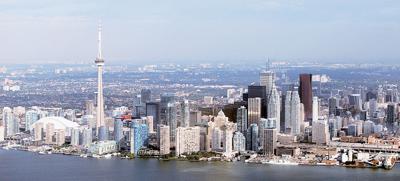
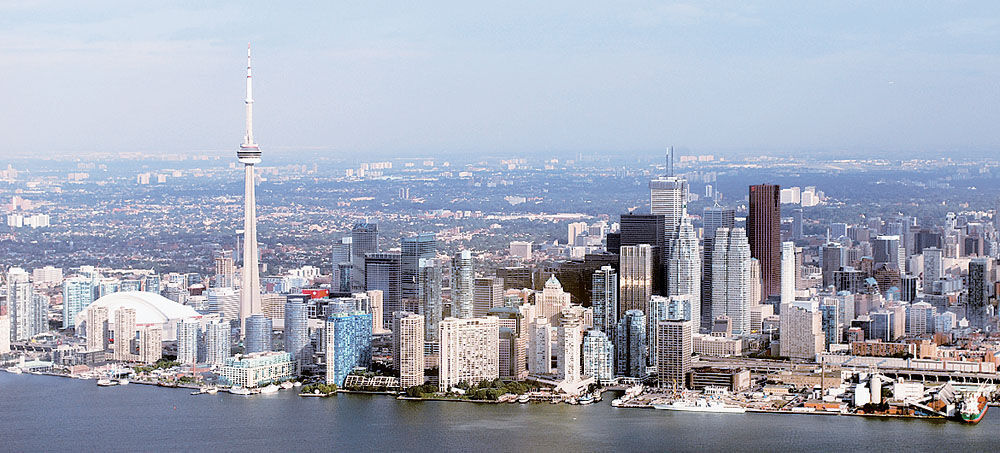
Prosperous, comfortable Toronto chose John Tory as its mayor. Poorer and struggling Toronto stuck with the Fords.
That’s what Monday’s votes suggested, anyway, when they were counted and the wards where each candidate did best were mapped.
In his first press conference Tuesday, Oct. 28, as mayor elect, Tory said it will be his challenge to do what he promised during the long campaign: turn Toronto into a united city.
He’d accept the task, he said, of convincing those residents who feel alienated from city hall to look at Toronto as one, undivided place.
He didn’t agree that 60 per cent of its citizens who voted didn’t want him as their mayor, saying he got a solid percentage of the vote in all areas of the city.
"I prefer to look at the glass as half-full," said Tory, who later on Tuesday announced a Transition Advisory Council of citizens from across the city to look at traffic congestion, transportation planning and housing before the new council term begins in December.
Tory was right in that his support greatly improved on what George Smitherman – another ex-provincial politician seeking the mayor’s chair – managed against Rob Ford in 2010.
In conceding defeat Monday, the mayor’s brother Doug recalled that together the brothers had "changed the political landscape in Toronto." That was true when Rob won with 47 per cent of the vote, taking every ward outside downtown and midtown.


In that moment, it looked like the amalgamated Toronto – six cities forced to merge in 1998 – was split along strictly urban-suburban lines, rather than by the economic divisions deepening between the city’s richer and poorer areas.
This time, though, Ford Nation didn’t capture south Etobicoke, or anything in North York around that former city’s booming centre.
The Ford brand won over almost all of Scarborough, where the brothers had promised new subway lines, but not as overwhelmingly as they did in 2010.
Tory, generally speaking, did best in the city’s higher-income areas. Ford excelled only in his north Etobicoke home base and areas away from Toronto’s wealthy core and waterfront.
Olivia Chow, the third-place candidate, was strongest in her old Trinity-Spadina constituency, and in Parkdale, Davenport and Riverdale.
"We are not one Toronto. That is a myth," said Ari Goldkind, a distance fourth-place finisher who said this situation would continue until the city’s administration was willing to invest to help those who are struggling.
Until then, Goldkind said, we’ll remain a "city of enclaves" unwilling to mix with people who are different.
The city has, however, worked with social agencies and the province for almost a decade to reverse the inequities found in many of its suburban neighbourhoods.
Years of community hub-building and organizing have left some results but also mixed feelings in many of these designated ‘priority’ areas in Scarborough, in York and on the city’s northern fringes: Doug Ford seemed to score well in most.
Just as striking as the leadership shift from the Fords to Tory is the fact that council incumbents seemed so easily to win across the city, with several racking up 80 or more per cent of the vote.
This includes mid-towner Josh Matlow and Scarborough-Agincourt’s Norm Kelly who both got 86 per cent, but many other veteran incumbents are likely to start the term feeling their positions are safe even if they oppose Tory’s agenda.
It was rare to see incumbents win without the lion’s share in their wards, though Frank Di Giorgio was returned in his York South-Weston district with 28 per cent, and Ron Moeser, facing several strong challengers, won in Scarborough East with 25 per cent.
John Parker in Don Valley West was the only incumbent to fall, losing a rematch to the Tory-endorsed Jon Burnside.
Those who the Fords wanted to punish in Monday’s vote went unpunished. Paul Ainslie, whose constituents in Scarborough East were robocalled by the mayor after he voted against the Scarborough subway extension, won in a walk, with 74 per cent.
The Fords, gathered in their mother Diane’s basement after polls closed, had also hoped their ally Gus Cusimano, whom they also supported in 2010, would this time capture Maria Augimeri’s York Centre ward.
"C’mon," the mayor said, seconds before the first results, shown on television, confirmed Augimeri would win. She took about 43 per cent, while Cusimano – close behind in 2010 - this time had 28, and Anthony Fernando, another candidate, had 23.
"They split the vote," a disappointed Doug Ford observed.








Anyone can read Conversations, but to contribute, you should be a registered Torstar account holder. If you do not yet have a Torstar account, you can create one now (it is free).
To join the conversation set a first and last name in your user profile.
Sign in or register for free to join the Conversation