

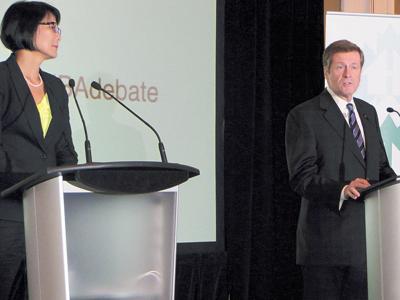

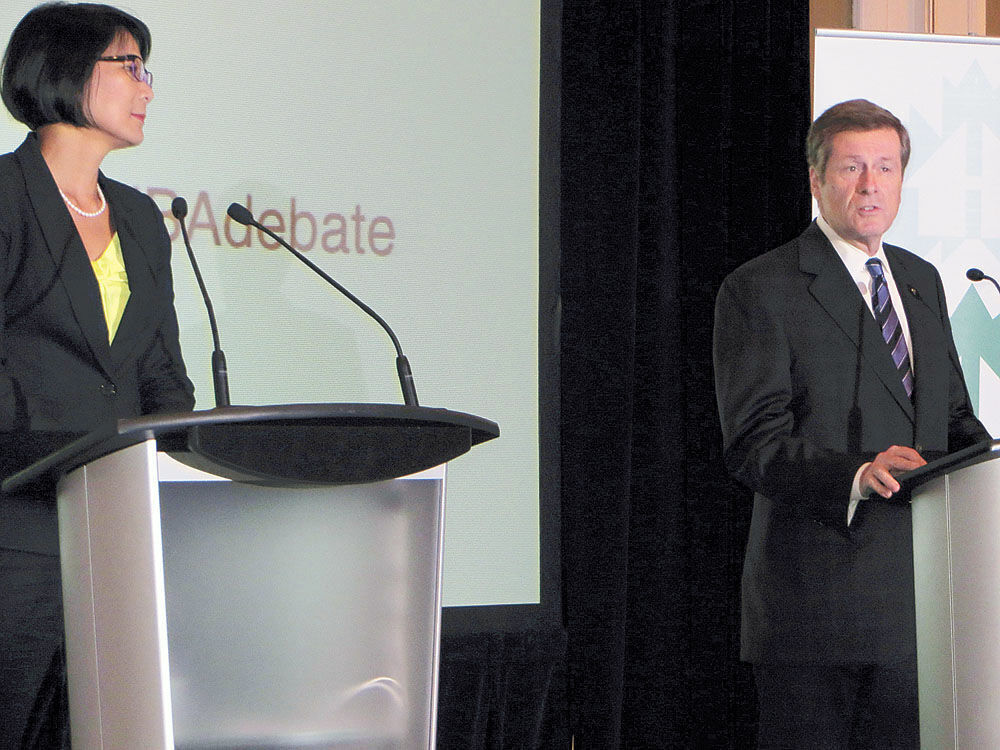
Toronto developers did not get a promise from John Tory or Olivia Chow to make building homes in the city less expensive, but each mayoral candidate said they’d speed the process up.
The local home-building industry isn’t hurting – it employs 322,000 people and Toronto council approved $21 billion in new developments, including 7,000 condominium units, last month alone – but Ontario Home Builders’ Association members still have complaints about the time the city takes to approve building permits and zoning changes.
They also dislike government-imposed costs, such as the municipal land transfer tax and development charges, which builders say can add up to 20 per cent of a condo’s price.
"There’s a perception the developer is paying for it. It’s the purchaser that’s paying for it," said Gary Switzer, Toronto Chapter chairperson of the Building Industry and Land Development Association.
During a morning debate which was overshadowed by Mayor Rob Ford’s dramatic departure from the mayoral race later on Friday, Chow and Tory refused to budge on the city’s revenue-taking but offered the industry other help.
Chow promised, if elected, to defer development charges for at least 10 years on projects containing 20 per cent affordable housing and, as added incentive, would approve their zoning and site plans within one year "because faster approval means saving money."
Getting approval for a development, including a zoning change, took 18 months when she was a city councillor, and now takes three years, Chow told industry representatives at the Westin Prince Toronto hotel in York Mills. "That’s insane."
But while Chow laid some blame for delays with different city hall departments she said need to be brought together, she added those departments are "understaffed somewhat" and need more employees.


Tory said he’d challenge developers to build private affordable housing units on available public lands, such as on Toronto Parking Authority lots or Toronto Community Housing properties.
The former Ontario Progressive Conservative leader said the city could speed its approval process by installing new technology builders could use online, instead of dealing in person with a city bureaucracy still "wheeling around files in shopping carts."
After hearing from the renovation side of the industry, Tory said small building projects should have a new and different review process for building permits, one that "doesn’t get to the political level."
Chow objected that building permits have nothing to do with the political process, but Tory insisted local city councillors do get involved, which he said complicates things. "I’m saying they should never get the call."
When one OHBA member called "inclusionary zoning" – a city standard that would force 20 per cent of any project to be affordable – a failed idea, Chow disagreed. "People are having a tough time. We have to do something," said the former Trinity-Spadina MP.
Tory said he’d encourage builders complaining about Toronto’s traffic congestion to minimize disruption their own projects cause, suggesting he’d give them incentives to complete their work faster if it blocked a traffic lane, and assign them stiffer penalties if those lanes remained blocked.
The OHBA supports keeping the Ontario Municipal Board, the provincially-appointed appeal body for planning decisions, in place, and has lobbied against a private member’s bill to remove Toronto from the tribunal’s jurisdiction.
The OMB is unpopular with Toronto residents who dislike seeing it overturn city council decisions, and the OHBA has said councillors use the tribunal as "a political scapegoat."
Tory said the OMB is imperfect, and the industry should "get on board" with the city’s plan to set up a local appeals board as a first step toward OMB reform.
Establishing a local body to deal with appeals of its committees of adjustment decisions would "show Toronto’s capable of running its own store," said Tory.
Chow also supported a local appeals body, but pressed by Tory, said she wanted to drop the OMB altogether as the final arbiter of city planning. A city as big as Toronto, Chow said, doesn’t need a provincial body to tell it what needs to be done.
The two candidates spend much time at the debate arguing unproductively about each others’ plans for funding a downtown relief subway line.
At one point, the association’s CEO Joe Vaccaro offered his members’ "support and prayers" to the ailing Mayor Rob Ford for a speedy recovery.












Anyone can read Conversations, but to contribute, you should be a registered Torstar account holder. If you do not yet have a Torstar account, you can create one now (it is free).
To join the conversation set a first and last name in your user profile.
Sign in or register for free to join the Conversation